
There’s No Shame in Trying: Why DIY Storytelling Sometimes Stalls
The human mind is attracted to novelty. Studies of infants prove this is a trait hardwired into us from birth. And I wonder if this attraction to newness is what ignites our curiosity to try DIY.
Doing it oneself (whatever it happens to be) brings fabulous rewards: it forces us to learn new vocabulary, to enjoy a sense of accomplishment, and even to experience real-world principles that were only intellectual concepts before we began our journey.
And with a supercomputer in our pocket, what could go wrong?
In a chain of events that began with my discovery of a faulty carburetor and continued through several ChatGPT sessions and many replaced parts, I finally succumbed to what I felt was the "drive of shame" to deliver my still-not-starting snowblower to the good team at EMS Small Engines. Far from belittling me for my unsuccessful DIY repairs, they were suitably impressed by my swapped carb, my repaired governor gear, and new spark plug installation. A pat on the back and a promise to fix my fixes was all it took for me to feel proud of what I had done, despite my lack of success.
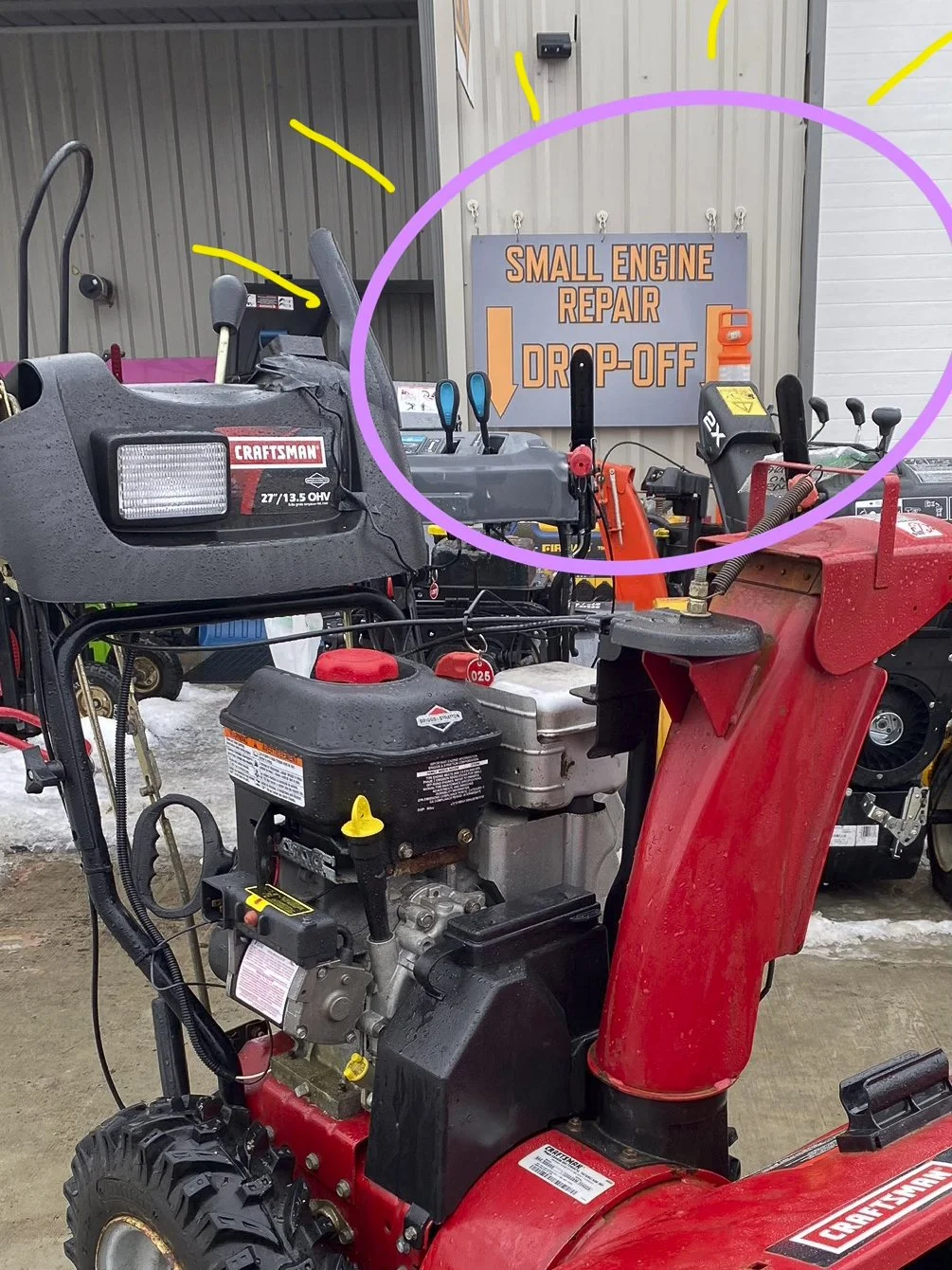
Sheepishly I approached the experts at EMS Small Engine Repair after finally agreeing that my efforts at DIY solutions were in vain. Far from making me feel diminished, they helped me feel great that I had tried. And, in return, I was so relieved to turn my project over to the experts. So it is with DIY storytelling, also.
Similarly, I have lost track of how many clients have called me to help them out of their DIY storytelling situations. There's usually a sheepish admission that they tried to make their own instructional video, promotional film, or life story. Sooner or later they produce what sounds like an apology for trying. None needed, I tell them.
Just like our small engine friends, I'm in the habit of handing out kudos to those who gave it a shot.
If you're resonating with this story, here's an affirming "uh-oh" list of why things sometimes go off the rails for DIY storytelling:
Focus. Asking someone in your organization to add this to their job can be a bit like asking them to learn how to solder copper pipe so they can fix a leak in the office bathroom. They'll eventually get it, but it might take a while to aggregate the skills and the uninterrupted time.
Skills. Knowing that you want a video (or a written feature) and knowing how to create one can reveal gaps in interview techniques, clean audio capture, effective lighting, composition, editing, rendering, and sharing. Each of these technical aspects represents a learning curve. And a single weak element has the power to counteract the impact of the rest, no matter how strongly they're employed. Just like my no-start snowblower, having something 80% good still leads to disappointment.
Vision. Whether in writing or video, the overarching intentionality of storytelling is part art and part science. It might be comparable to watching an experienced baker handle bread dough—there's a certain struggle in the early stages of learning that one simply has to push through. Preserving vision in a storytelling asset is far harder than pushing the big red record button.
Filming equipment. Despite the occasional boast by ball-cap-wearing "creators," most phones are not up to the task of rendering flattering and compelling video. If the message expectations are low—say, it's part of an everyday reel delivery that's flooding the zone with content—then phone-shot DIY might work. But it's soul-crushing to see organizations pay large sums for corporate branding, then dish out amateurish reels that fail to align with those larger marketing expectations.
Charlie, my childhood fishing buddy, taught me that the lure needs to match the fish. It doesn't track that people turn to small-lure tactics and expect big-fish results.
Postproduction equipment. I had a client ring me up after a full eight hours of filming (using their phone) and another full day of editing on their desktop computer. They were in a panic because their best office computer had struggled to complete only about 20% of the video before crashing—and taking their bookkeeping records with it. The poor office administrator who was tasked with this project was a broken individual. Most pieces of office equipment (and office administrators for that matter) simply aren't built to produce professionally edited and rendered films, even short ones. The climax of this story was when I told them my price for creating a professional version of what they were trying to DIY. They laughed because, relative to the many hours of labour and stress, I was a bargain.
My favourite line that puts it in perspective: I charge the same as a good plumber. And for most people who have tried DIY plumbing, this always leads to a better outcome.
*****
These five points, selected from an even broader list of pain points, give us a sense of why storytelling can sometimes be a source of frustration for enthusiastic entrepreneurs, managers, and individuals.
Similar to my outcome with the snowblower, experienced DIY clients often respond with shock (the good kind!) when they find out how much it really costs to have the job done by a professional. But it's through the attempt that we grow in our own knowledge and in our appreciation of others.
Not a bad result for all of our efforts, really.